
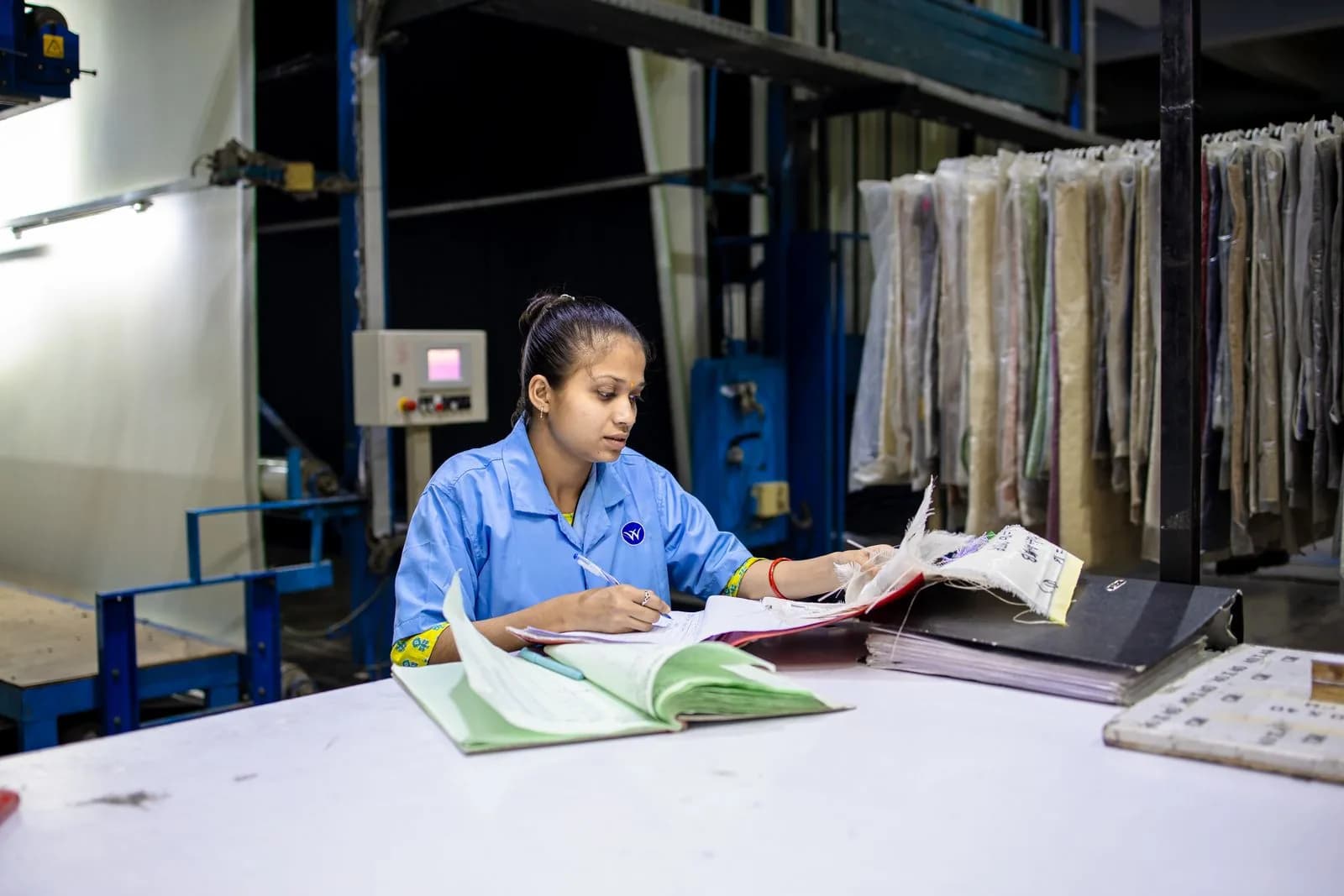
Factory employee reviewing audit documents at her workstation
SMETA Social Compliance Coaching

SMETA Coaching: Sedex SMETA Audit Preparation

QTC coaches factories preparing for the Sedex SMETA audit: gap diagnosis against the ETI Base Code and SMETA's four pillars, organising working-hours, wages, health & safety and business-ethics evidence, running mock audits and closing CAPA evidence item by item — so the factory enters its formal audit with a complete evidence pack.

QTC provides coaching, gap diagnosis, mock audits and CAPA support; the SMETA audit is conducted by a Sedex Affiliate Audit Company, which issues the audit report.

What SMETA is

SMETA (Sedex Members Ethical Trade Audit) is an on-site ethical trade audit methodology developed by Sedex, used to assess working conditions, health & safety, environmental management and business conduct at supplier sites. Sedex owns and maintains the SMETA methodology but does not carry out the audits itself; audits are performed by independent third-party Affiliate Audit Companies, the only organisations authorised to use the SMETA methodology. SMETA measures a site against the ETI Base Code, ILO Conventions and local law. It is not a pass/fail certification but a continuous-improvement tool, and its outcome is an audit report.

  • Developed and maintained by Sedex, a global technology company for supply-chain sustainability data and insights
  • Not a certification: no pass/fail outcome — the audit produces a report
  • Conducted by Sedex Affiliate Audit Companies, the only bodies authorised to use the SMETA methodology
  • Current version: SMETA 7

The ETI Base Code and the four pillars

SMETA is anchored in the Base Code of the Ethical Trading Initiative (ETI), an internationally recognised code of labour practice founded on ILO Conventions with nine clauses. A SMETA audit is built from up to four pillars — Labour Standards, Health & Safety, Environment and Business Ethics — each anchored in the ETI Base Code. The Base Code sets minimum, not maximum, standards; where local law offers greater protection, that higher standard applies.

  • 1 Employment is freely chosen / 2 Freedom of association & collective bargaining / 3 Safe and hygienic working conditions
  • 4 No child labour / 5 Living wages are paid / 6 Working hours are not excessive
  • 7 No discrimination / 8 Regular employment is provided / 9 No harsh or inhumane treatment

2-Pillar vs 4-Pillar

A SMETA audit is built from up to four pillars: Labour Standards, Health & Safety, Environment and Business Ethics. A 2-Pillar audit covers exactly Labour Standards and Health & Safety; a 4-Pillar audit adds Environment and Business Ethics. 2-Pillar is not a lower standard but a narrower scope: within its two pillars it applies the same on-site assessment as a 4-Pillar audit. Sedex gives an illustrative on-site time of about two days for 2-Pillar and three days for 4-Pillar, with actual duration depending on site size and worker numbers.

  • 2-Pillar: Labour Standards + Health & Safety
  • 4-Pillar: Labour Standards + Health & Safety + Environment + Business Ethics
  • A 4-Pillar report satisfies a 2-Pillar request; the reverse is not true
  • Scheduling: announced, semi-announced (at least a 3-week window) or unannounced

The Sedex platform

Once an SMETA audit report is uploaded to the Sedex platform, it can be shared with multiple customers at once — one report serving several buyers. Buyers often use Sedex's Radar risk-assessment tool, combining country and sector risk with site data, to decide whether to request 2-Pillar or 4-Pillar scope and which scheduling type to use.

  • Audit reports are uploaded to the Sedex platform and shared with multiple customers at once
  • Sedex Radar combines inherent risk with site data to score country and sector risk
  • Higher-risk sectors or countries are more likely to warrant 4-Pillar scope

Who requires the SMETA audit

SMETA is used by Sedex members — mainly brands and retailers — to assess suppliers, sharing audit reports through the Sedex platform to reduce duplicate audits. The choice of 2-Pillar or 4-Pillar sits with the buyer, driven by its due-diligence programme and risk assessment; a supplier cannot substitute one scope for the other.

  • Requirers: Sedex members (brands and retailers)
  • Reports are shared on the Sedex platform and can satisfy several buyers at once
  • The pillar count is specified by the buyer and cannot be swapped by the supplier

Common SMETA findings

Common SMETA findings concentrate in labour standards and health & safety, with 4-Pillar audits also covering environment and business ethics. Many findings are not missing policies but records, site conditions and interview answers that do not corroborate each other, leaving the auditor unable to verify.

  • Labour: working hours, wages, freedom of association and grievance mechanisms
  • Health & safety: fire safety, PPE, work-injury records and emergency drills
  • Environment (4-Pillar): wastewater, waste, chemicals and permit records
  • Business ethics (4-Pillar): bribery, anti-corruption and conflict-of-interest records
Anonymised case
CompanyA food manufacturer
SchemeSMETA + BRCGS FOOD coaching
Outcomereceived a BRCGS FOOD Grade A certificate
Pathway

A field-tested methodology for passing on the first attempt: how SMETA coaching works

This methodology links the five stages into a field-tested first-attempt loop — from gap diagnosis to formal-audit readiness, each with verifiable deliverables — so the factory enters its first formal audit with a complete evidence pack.

1

Gap diagnosis

Benchmark the site against the ETI Base Code and SMETA's four pillars clause by clause to find gaps and priorities.

Deliverables
  • Gap list
  • Priority remediation items
  • Four-pillar benchmark table
2

Documents & evidence

Organise policies and working-hours, wages, health & safety and business-ethics records per the gap list.

Deliverables
  • Policy and procedure documents
  • Record templates
  • Document evidence pack
3

Mock audit / pre-audit

Run a full rehearsal from an auditor's perspective before the formal audit to verify the system works.

Deliverables
  • Mock audit report
  • Nonconformity list
  • Remediation recommendations
4

CAPA evidence closure

Remediate each item and leave verifiable evidence, closing every nonconformity.

Deliverables
  • CAPA evidence pack
  • Before/after comparison
  • Closure records
5

Formal-audit readiness

Organise audit documents and site status so everything is verifiable on the day of the formal audit.

Deliverables
  • Audit document list
  • Response preparation
  • Pre-audit checklist
Trust & commitment

Trust & commitment: risk-sharing and the coaching team

The value of SMETA coaching rests on a field-tested first-attempt methodology, a refund commitment that shares risk with the factory, and a coaching team with audit experience.

Risk-sharing commitment

If the audit fails due to coaching reasons, a full refund applies (provided the factory follows the agreed remediation plan).

Coaching team

Coaching team: 15 coaches in mainland China + 5 in Southeast Asia.

Project Manager

Hu Xiuru

15+ years of coaching experience; ISO 14001 lead auditor.

Technical Manager

Frank Bai

15+ years of coaching experience; lead auditor training for ISO 45001, ISO 14001 and SA8000.

Senior Consultant

AnTran

8+ years of audit and training experience; ISO 14001, SA8000 and BSCI lead auditor; Vietnam local technical support.

Frequently asked questions

The most common questions about SMETA coaching.

No. SMETA is an ethical trade audit methodology developed by Sedex; it has no pass/fail outcome and no grade, and the audit produces a report. QTC provides coaching and preparation so the factory enters its formal audit ready.

Turn Sedex SMETA's four pillars into actions you can check and close

Tell us your target buyers and the audit scope they require (2-Pillar or 4-Pillar). QTC starts with a gap diagnosis and takes you through to formal-audit readiness.

Contact QTC