
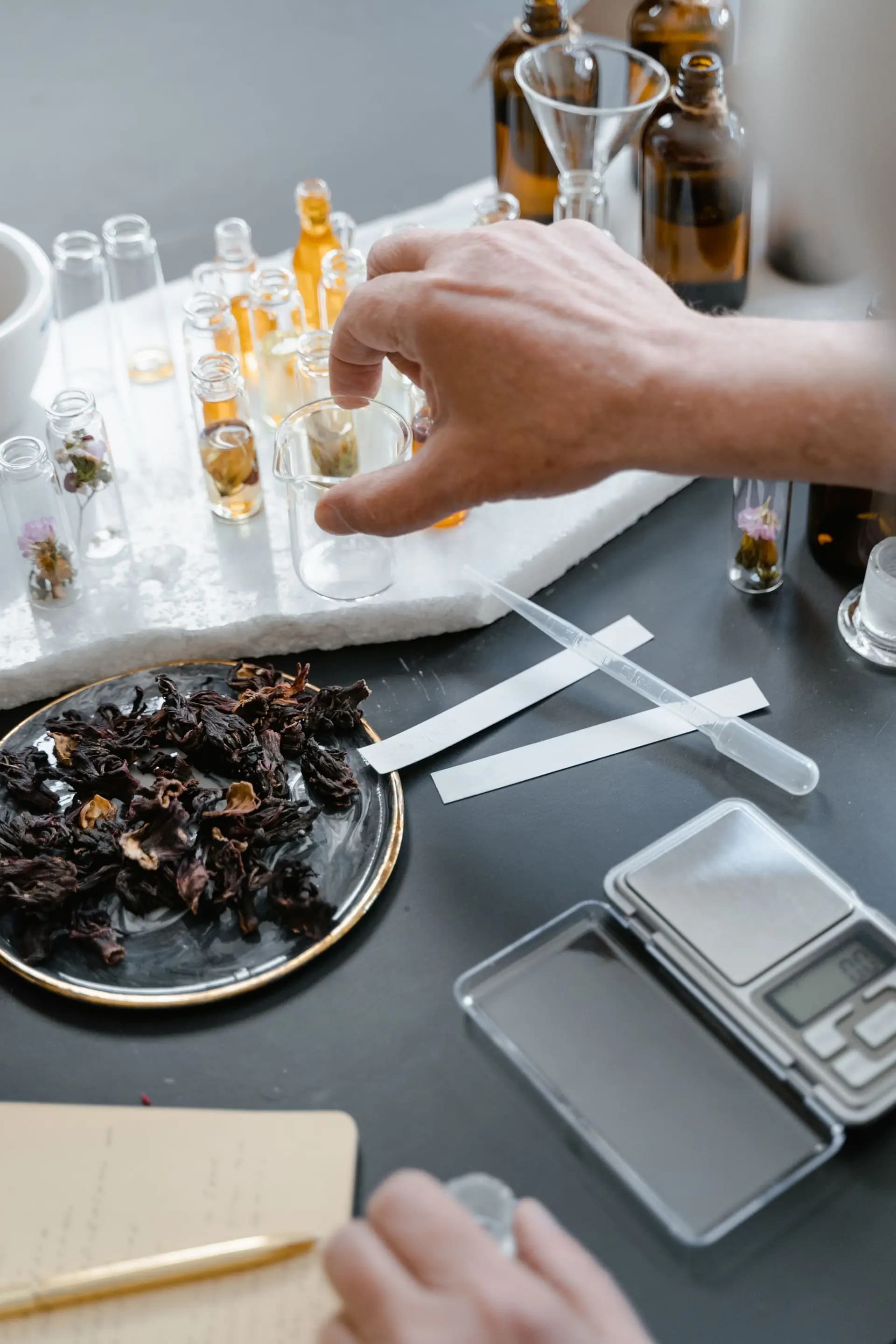
Botanical raw materials with dried flowers, oil vials and a precision scale
Raw Materials & Ingredients

Cosmetic Raw Materials & Ingredients Compliance

For cosmetic raw-material and ingredient suppliers: supplier qualification, EFfCI GMP, ingredient regulatory-status and restricted-list checks.

  • Market route first
  • Evidence files aligned
  • Less rework before audits

Raw Materials & Ingredients Challenges

Ingredient suppliers face brand onboarding audits, ingredient regulatory status and cross-contamination controls.

Ingredient Regulatory Status

Ingredient availability and concentration limits must be checked against public directories (e.g. EU CosIng) and FDA restricted lists.

Supplier Qualification & Quality Agreements

Brands require complete, consistent COAs, specifications, MSDS and quality agreements.

EFfCI GMP & Cross-Contamination

Shared-line production needs cleaning validation, residue analysis and mix-up prevention.

Buyer Second-Party Audit

Brand sourcing often runs second-party site audits and supplier tiering.

Related Compliance Support

QTC helps ingredient suppliers organise ingredient status, supplier files and GMP evidence to a reviewable state, and undertakes buyer-commissioned second-party audits.

EFfCI / ISO 22716 Ingredient GMP Readiness

Staged

For ingredient and fine-chemical suppliers building EFfCI or ISO 22716 GMP evidence for brand onboarding audits.

Key Goal

Goal: build ingredient GMP evidence brands can rely on

What you get
  • Gap report aligned with EFfCI / ISO 22716
  • Cleaning-validation and residue-analysis plan
  • Traceability and mix-up-prevention evidence pack
  • Mock audit and CAPA closure

Raw-Material Supplier Second-Party Audit & Tiering

Staged

For brands commissioning QTC to run on-site second-party audits of ingredient suppliers, or suppliers improving second-party audit readiness.

Key Goal

Goal: quantify supplier risk and track remediation evidence

What you get
  • Second-party audit report (buyer-commissioned)
  • Supplier quality scorecard
  • Finding grading and remediation suggestions
  • Quality-agreement review comments

COA, Specification & Safety-Evidence Review

Staged

For ingredient suppliers needing COA, specification, MSDS and toxicology/heavy-metal data review.

Key Goal

Goal: make raw-material safety data complete and verifiable

What you get
  • COA and specification consistency check
  • Heavy-metal and impurity test plan
  • Safety-evidence pack organisation
  • Report technical review

Ingredient Supplier Compliance Route

QTC runs four steps: verify ingredient status, build the supplier file pack, address GMP/cross-contamination, then prepare for buyer audits. The timeline depends on file completeness — no fixed number.

1

Ingredient Status & Tiering

Check ingredient availability, concentration limits and export-market risk against public directories (e.g. EU CosIng) and restricted lists.

Deliverables
  • Ingredient status check list
  • Risk-tiering list
2

Supplier File Pack

Organise COAs, specifications, MSDS and quality agreements, and verify consistency.

Deliverables
  • File index
  • Consistency review comments
3

GMP & Cross-Contamination

Benchmark cleaning validation, residue analysis, traceability and mix-up prevention against EFfCI GMP.

Deliverables
  • GMP gap report
  • Cleaning-validation plan
4

Buyer Audit Preparation

Run mock audits and CAPA closure, and prepare audit documents and Q&A.

Deliverables
  • Mock audit report
  • CAPA closure records

Finished-Product vs Ingredient GMP

Finished-product factories and ingredient suppliers map to different GMP references; choosing wrong wastes effort.

StandardApplies ToFocusQTC Role
ISO 22716Finished-product factoriesHygiene, filling, batch records, traceabilityGap diagnosis and GMP coaching
EFfCI GMPRaw-material and ingredient suppliersCleaning validation, residues, cross-contaminationEFfCI-aligned readiness coaching

The two do not replace each other; ingredient suppliers usually meet EFfCI GMP as a threshold for finished-product factories. Certificates are issued by third-party certification bodies; QTC provides coaching and preparation.

Ingredient Standards & Directories

GMP standards and public regulatory directories for ingredient suppliers.

EFfCI GMP

Cosmetic-ingredient GMP guideline focused on cross-contamination and batch traceability.

ISO 22716

Cosmetic finished-product GMP guideline; often used as a QMS baseline reference by ingredient suppliers.

EU CosIng (Public Database)

EU cosmetic-ingredient database used to verify ingredient names and status; QTC has no database of its own.

FDA Prohibited and Restricted Ingredients

US FDA prohibited and restricted ingredient lists, used to verify availability and concentrations.

Frequently Asked Questions

Answering common questions on onboarding audits and ingredient status.

It depends on your position. Ingredient suppliers usually meet EFfCI GMP as a brand-onboarding threshold; ISO 22716 targets finished-product factories. The two can coexist — choose by buyer requirements.

Sustainability & ESG

Do Buyers Also Request ESG & Sustainability Evidence?

Beauty brands and retailers increasingly ask for sustainable packaging, raw-material sourcing, carbon inventory and EcoVadis ratings alongside quality and launch files.

Why QTC

The value of quality coaching rests on a repeatable closed-loop method, field-based coaching capability, and a clear division of work.

Four-step closed loop
1

Diagnose

Run a gap diagnosis against the target scheme and produce a gap list with priorities.

2

Build

Build the system, documents and evidence packs per the gaps.

3

Verify

Verify the system works through a mock audit / pre-audit.

4

Close

Close CAPA evidence, then re-check before the re-audit.

Coaching capability profiles

Cosmetics GMP (ISO 22716 / EFfCI)

Coaches gap diagnosis, document build and mock audits; delivers gap lists, CAPA plans and evidence packs.

MoCRA & EU Launch Files

Coaches registration/listing data organisation, PIF/CPSR Part A preparation and CPNP pre-checks.

Labels, Claims & Test Coordination

Coaches INCI checks, efficacy-claim evidence review and test-plan design.

Coach backgrounds

Formerly with Intertek, BV, SGS, NSF and similar bodies

5000+ · QTC Group service cases

QTC's own audit team

Audits are carried out by QTC's own team. Our auditors are experienced, several with audit backgrounds at large certification bodies; they undertake buyer-commissioned second-party audits and pre-audits and issue assessment reports.

Anonymised case

A cosmetics OEM · brand onboarding readiness

Trigger: a brand customer's onboarding review required an ISO 22716 system and complete product information files. Work: gap diagnosis against ISO 22716, production and hygiene document rebuild, PIF file organisation, a mock audit and item-by-item CAPA closure. Outcome: the document pack was delivered for the customer's review on schedule, and all mock-audit findings were closed.

Boundary statement

Certificates, verification statements and test reports are issued by the accredited body or laboratory that performs the work; formal audits are performed by accredited bodies, scheme owners, or the buyer's own auditors.

Preparing for an Ingredient Supplier Audit?

Share the ingredient type, target brands and current files. QTC will verify ingredient status and key gaps first, then map a readiness path.

Contact QTC