
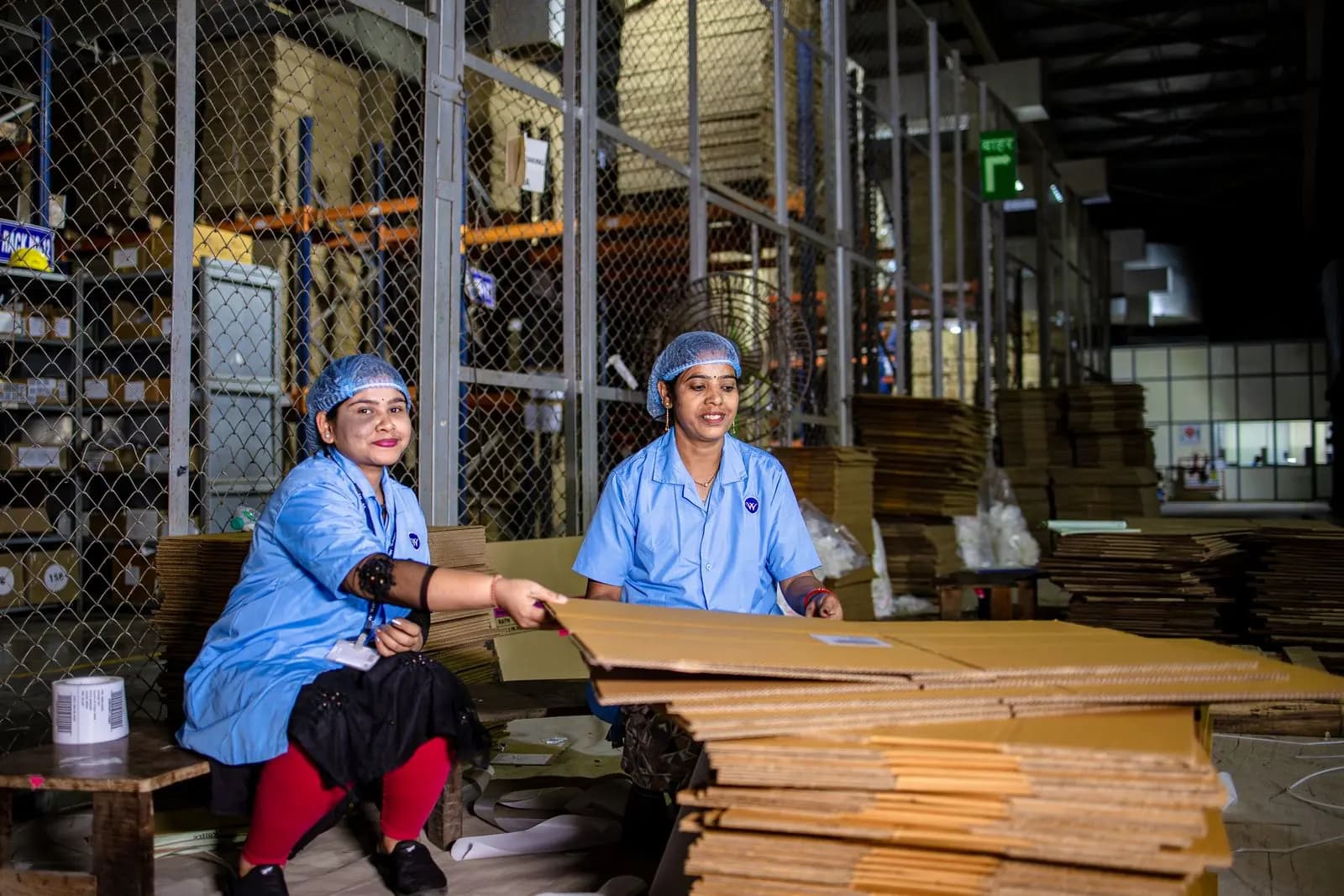
Workers preparing cardboard packaging at a consumer goods factory
Factory Product Safety & Inspection

Consumer Goods Factory Product Safety & Inspection Coaching

Bind product-safety rules to production control and inspection: RSL/restricted substances, first-article and in-line checks, AQL sampling, and CPC/GCC review.

What Factory Product Safety Coaching Is

This service binds consumer-goods product-safety rules (CPSIA, ASTM F963, EN71, REACH, Prop 65, and others) to production control and pre-shipment inspection: from design-phase risk assessment and a restricted-substance/RSL programme, through first-article and in-line checks, to ANSI/ASQ Z1.4 / AQL pre-shipment inspection, and finally CPC/GCC document preparation and content review. QTC provides coaching, preparation and coordination; CPC/GCC documents are signed by the manufacturer or importer, and test reports are issued by the laboratory.

  • Is: translating safety rules into control actions across design, material, production and inspection
  • Is: coordination of restricted-substance/RSL programmes, first-article and in-line checks, and AQL pre-shipment inspection
  • Is: CPC/GCC document preparation coaching and content review (signing is done by the manufacturer or importer)

Rule Set and the Control Point Each Rule Closes

A single consumer product often falls under several rules at once. The mapping below shows which control point closes each rule, so teams can decide whether design, materials, production or documents should move first.

  • CPSIA / ASTM F963 (US toys and children's products) → design-phase risk assessment + first-article/in-line checks + CPC file
  • EN71 (EU toy safety) → design-phase risk assessment + CE technical file and declaration preparation
  • REACH (EU chemicals) → restricted-substance/RSL programme with supplier declarations, documents first
  • Prop 65 (California warnings) → material risk screening + warning label and exposure judgement
  • CPC/GCC (US compliance certificates) → test report and certificate field consistency + manufacturer/importer signing

Phased Pathway

QTC moves through the product lifecycle in phases, each with verifiable deliverables. Timeline depends on product count, materials and supply-chain complexity, so there is no fixed number.

  • Design-phase risk assessment: confirm applicable rules and high-risk materials and structures
  • Restricted-substance/RSL programme: build the restricted list, supplier declarations and document evidence chain
  • Production control: first-article inspection, in-line checks and process records
  • Pre-shipment inspection: ANSI/ASQ Z1.4 / AQL sampling against buyer standards
  • CPC/GCC document review: test report and certificate field consistency to support manufacturer/importer signing

Common Findings, Cost Drivers and Readiness Checklist

Common findings are missed high-risk materials at the design stage, missing supplier declarations, broken first-article/in-line inspection records, and report model versus certificate mismatches. Fee structure is typically assessed by product count, material risk and how complete the current files are — there is no fixed price.

  • Readiness: applicable rule list, BOM/material list, supplier restricted-substance declarations
  • Readiness: first-article and in-line inspection records, process parameter records
  • Readiness: current test reports, CPC/GCC drafts, label and tracking-label artwork
  • Common finding: model/batch mismatches across reports, certificates and labels

Coaching method and deliverables

QTC uses a repeatable closed-loop method: diagnose → build → verify → close. Coaching capability spans design-phase risk assessment, restricted substances/RSL, production control, pre-shipment inspection and CPC/GCC file review, delivering gap lists, risk assessment records, inspection plans and document review notes.

  • Closed-loop method: diagnose → build → verify → close
  • Capability spans design risk, restricted substances, production control, inspection and file review
  • Deliverables: gap lists, risk assessment records, inspection plans, file review notes

Related Pages

CPC/GCC documents are legally signed by the manufacturer or importer; QTC provides preparation coaching and content review. Pre-shipment inspection is buyer-commissioned, sampled to AQL / ANSI/ASQ Z1.4, and the inspection report supports receiving and release decisions. To learn more, visit the Quality coaching hub or the Consumer Goods industry hub; for structured learning, go to the QTC Academy.

  • Signing: CPC/GCC documents are signed by the manufacturer or importer
  • Inspection: buyer-commissioned sampling; the report supports receiving and release decisions

Why QTC

The value of quality coaching rests on a repeatable closed-loop method, field-based coaching capability, and a clear division of work.

Four-step closed loop
1

Diagnose

Run a gap diagnosis against the target scheme and produce a gap list with priorities.

2

Build

Build the system, documents and evidence packs per the gaps.

3

Verify

Verify the system works through a mock audit / pre-audit.

4

Close

Close CAPA evidence, then re-check before the re-audit.

Coaching capability profiles

Toys & Children's Products (CPSIA / ASTM F963 / EN71)

Coaches product classification, test matrices and CPC file preparation; delivers rule lists, test matrices and file-review notes.

Furniture & Hardlines (ASTM F2057 / flammability / BIFMA)

Coaches tip-over, flammability and coating-chemical screening; delivers test matrices and failure-remediation plans.

Inspection & Quality (ANSI/ASQ Z1.4 / AQL)

Coaches inspection planning, defect grading and remediation re-inspection; delivers inspection plans, reports and remediation plans.

Coach backgrounds

Formerly with Intertek, BV, SGS, NSF and similar bodies

5000+ · QTC Group service cases

QTC's own audit & inspection team

Audits and inspections are both carried out by QTC's own team. Our auditors are experienced, several with audit backgrounds at large certification bodies; they undertake buyer-commissioned second-party audits and pre-audits and issue assessment reports. Inspections are performed by our own inspection team.

Anonymised case

A toy exporter · US market file readiness

Trigger: a US customer required a CPC and complete test files, with product classification and applicable standards unclear. Work: product classification and applicable-standard determination, a CPSIA / ASTM F963 test matrix, test coordination and report review, and CPC file-pack assembly. Outcome: the full test matrix was completed and the CPC file pack was delivered to the customer on schedule.

Boundary statement

Certificates, verification statements and test reports are issued by the accredited body or laboratory that performs the work; formal audits are performed by accredited bodies, scheme owners, or the buyer's own auditors.

Related hubs

Want structured learning on related standards and practice? Visit the QTC Academy.

Frequently Asked Questions

Common questions about this coaching service.

QTC provides coaching, preparation and coordination; formal audits, verification and certificates are issued by accredited bodies, scheme owners or the buyer's own auditors.