
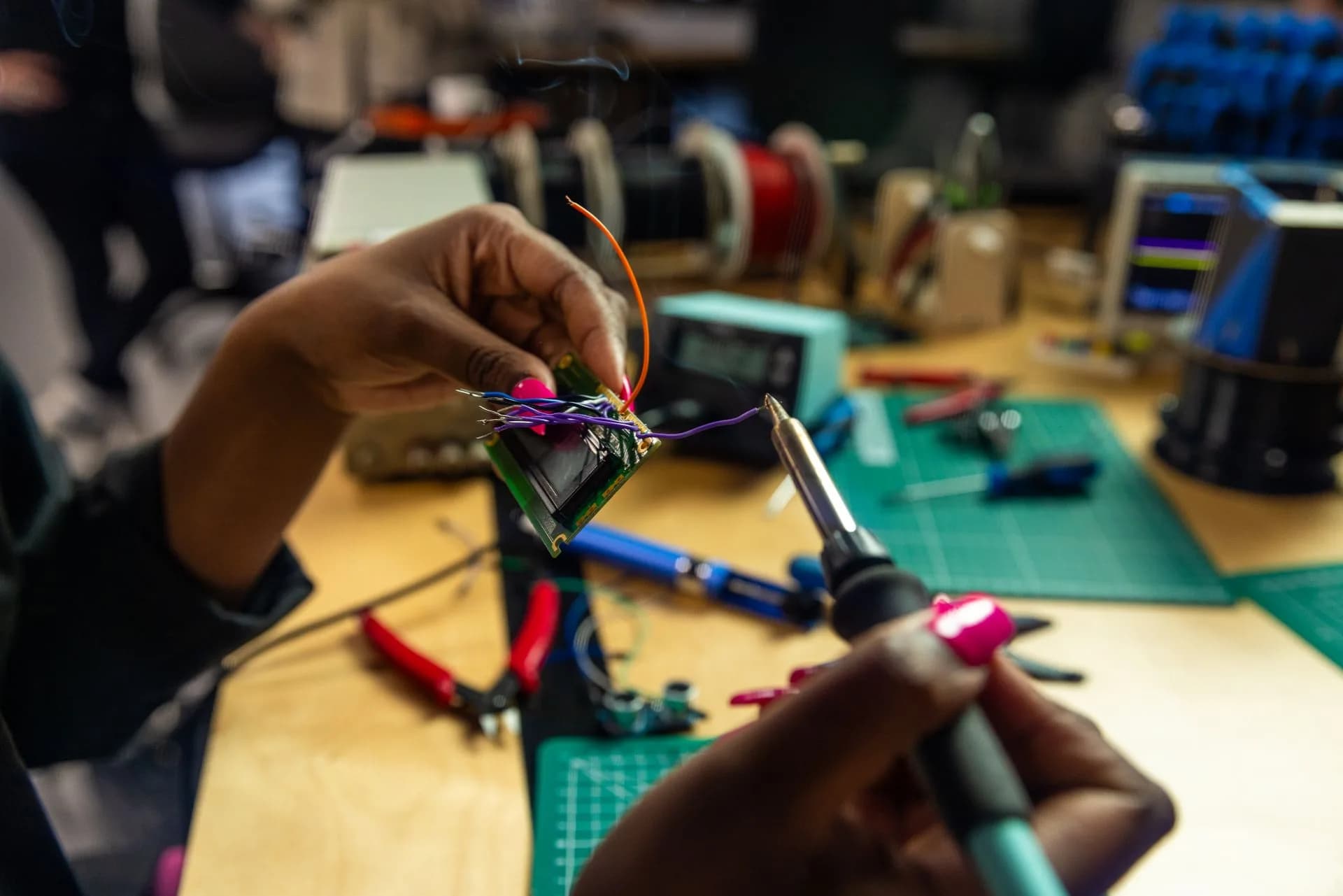
Consumer Electronics Market Access & Compliance Coaching
IEC 62368-1, EMC, CE/FCC/UKCA and RoHS/REACH coaching for consumer-electronics brands and factories: pathway scoping, test coordination, report review and remediation.
- Standards mapped first
- Files and evidence aligned
- Less rework before audits
Core Challenges for Consumer Electronics
Consumer-electronics projects most often stall on model consistency, wireless files, marketplace documents and material declarations.
Report model vs sales model mismatch
The model on the test report must match the sales model and nameplate; a mismatch calls the whole file into question.
Missing wireless-module FCC/RED files
Products with Bluetooth, Wi-Fi or cellular modules need module approvals plus whole-product RF assessment; missing files trigger repeated rejection.
Marketplace files not aligned with certificates
Marketplaces like Amazon and Temu check whether certificates, labels, manuals and images support each other.
Material declarations cannot trace to the BOM
RoHS/REACH declarations must trace to materials via the BOM; a product-level report alone is not enough.
Coaching Route
From product and market scoping to marketplace-file assembly, consumer-electronics market access broken into executable steps.
Product & target-market scoping
Confirm product type, wireless capability, use scenario and target markets.
- Product profile list
- Target-market list
Applicable standards & gap diagnosis
Benchmark against IEC 62368-1, EMC, wireless and RoHS/REACH requirements.
- Applicable standard list
- Gap list
Test plan & lab coordination
Design the test matrix and coordinate laboratories; testing is performed by the labs.
- Test matrix
- Sampling list
Report & technical-file review
Review consistency across report models, DoC, manuals and labels.
- Report review notes
- Technical-file alignment table
Remediation loop & marketplace files
Close failure items and assemble a submittable marketplace file package.
- Remediation evidence pack
- Marketplace file checklist
CE vs FCC vs UKCA
Choose the lead access route by target market, and QTC's role in it.
| Target market | Lead route | QTC coaching |
|---|---|---|
| European Union | CE: LVD/EMC/RED + IEC 62368-1 safety + DoC and technical file | Pathway scoping + test coordination + DoC review |
| United States | FCC (EMC/RF) + NRTL (UL/ETL) safety listing | FCC procedure scoping + NRTL safety test coordination |
| United Kingdom | UKCA / UK(NI) conformity assessment | UKCA route coaching + file alignment |
| Multiple markets | IECEE CB Scheme + national deviations | CB route + multi-market file matrix |
Note: CE is a manufacturer self-declaration based on conformity assessment; FCC involves FCC certification/authorization; UL/ETL listings are issued by accredited certification bodies. QTC helps prepare and coordinate.
Key Standards for Consumer Electronics
This scenario centres on IEC 62368-1, EMC, CE/UKCA and RoHS/REACH; testing is performed by laboratories, which issue the reports.
IEC 62368-1
The hazard-based safety standard for AV/ICT equipment; UL 60950 is withdrawn and must not be cited as current.
EMC
FCC Part 15, the EU EMC Directive and RED electromagnetic-compatibility requirements; testing is performed by laboratories.
CE / UKCA
EU CE and UK UKCA conformity-assessment routes, based on DoC and technical files.
RoHS / REACH / SCIP
Material-compliance requirements for restricted substances, SVHC and SCIP notification, traced via the BOM.
Continue to the Related Service Page
These service pages cover the scheme coaching, file preparation and testing coordination behind this scenario.
Electronics Safety, EMC & Wireless Market Access Compliance Prep
Providing electronics brands, EMS/ODM factories, and exporters with CE/UKCA/FCC/UL/ETL market access path determination, test plan design, lab coordination, technical file/manual review, and test failure remediation coaching.
IEC 62368-1, EMC, Battery & RoHS/REACH Market Access Coaching
One coaching offer bundling IEC 62368-1, EMC, battery (UN 38.3/IEC 62133), RoHS/REACH/SCIP and CE/FCC/UL/CB market access.
Frequently Asked Questions
Common questions about consumer-electronics market access and compliance coaching.
It depends on product type and target market: safety usually follows IEC 62368-1, EMC follows the applicable EMC requirements, wireless follows FCC/RED, and materials follow RoHS/REACH. QTC runs a gap diagnosis first and returns an applicable list with priorities.
Related Practical Guides
Continue with the regulations, standards and audit points behind this scenario.
CE, FCC vs. UL: Global Market Access Guide for Electronics
Comprehensive analysis of EU CE, US FCC, and North American UL (NRTL) certifications: scope, testing differences, and compliance pathways to help electronics exporters pinpoint required market access certificates.
RoHS, REACH & SCIP Explained: Essential Environmental Compliance for Electronics
Clarify the 10 restricted substances under RoHS, reporting obligations for REACH SVHCs, and mandatory SCIP database submissions to help electronics supply chains avoid EU environmental regulatory risks.
Battery Compliance Basics: What's the Difference Between UN 38.3 and IEC 62133?
Clear comparison between UN 38.3 (focused on transport safety) and IEC 62133 (focused on portable use safety) regarding test dimensions and regulatory weight, guiding companies in battery test planning.
Why QTC
The value of quality coaching rests on a repeatable closed-loop method, field-based coaching capability, and a clear division of work.
Diagnose
Run a gap diagnosis against the target scheme and produce a gap list with priorities.
Build
Build the system, documents and evidence packs per the gaps.
Verify
Verify the system works through a mock audit / pre-audit.
Close
Close CAPA evidence, then re-check before the re-audit.
Market Access (IEC 62368-1, EMC, CE/FCC/UKCA)
Coaches pathway scoping, gap diagnosis, test coordination and report review; delivers applicable-standard lists, test matrices and file-alignment notes.
PCBA / EMS Process Quality
Coaches ESD, solder/assembly control, traceability and 8D/CAPA; delivers gap lists, process control sheets and remediation evidence packs.
Battery / Material Compliance (UN 38.3, IEC 62133, RoHS/REACH)
Coaches battery transport files and material-declaration review, coordinates testing and reviews reports; delivers test matrices and file-alignment notes.
Coach backgrounds
Formerly with Intertek, BV, SGS, NSF and similar bodies
5000+ · QTC Group service cases
Audits and inspections are both carried out by QTC's own team. Our auditors are experienced, several with audit backgrounds at large certification bodies; they undertake buyer-commissioned second-party audits and pre-audits and issue assessment reports. Inspections are performed by our own inspection team.
Anonymised case
A consumer-electronics maker · customer second-party audit readiness
Trigger: a brand customer's second-party audit focused on process control and batch traceability, and the plant's record chain was incomplete. Work: gap diagnosis against the customer's audit criteria, completion of ESD and soldering process-control records, batch traceability file rebuild, and 8D closure of each issue. Outcome: the remediation evidence pack was submitted for the customer's review on schedule, and the audit proceeded as planned.
Certificates, verification statements and test reports are issued by the accredited body or laboratory that performs the work; formal audits are performed by accredited bodies, scheme owners, or the buyer's own auditors.
Find What Could Block Your Consumer Electronics
Share the product type, target markets, current reports and marketplace requirements. QTC will identify the applicable standards and file breakpoints first.
Contact QTC