
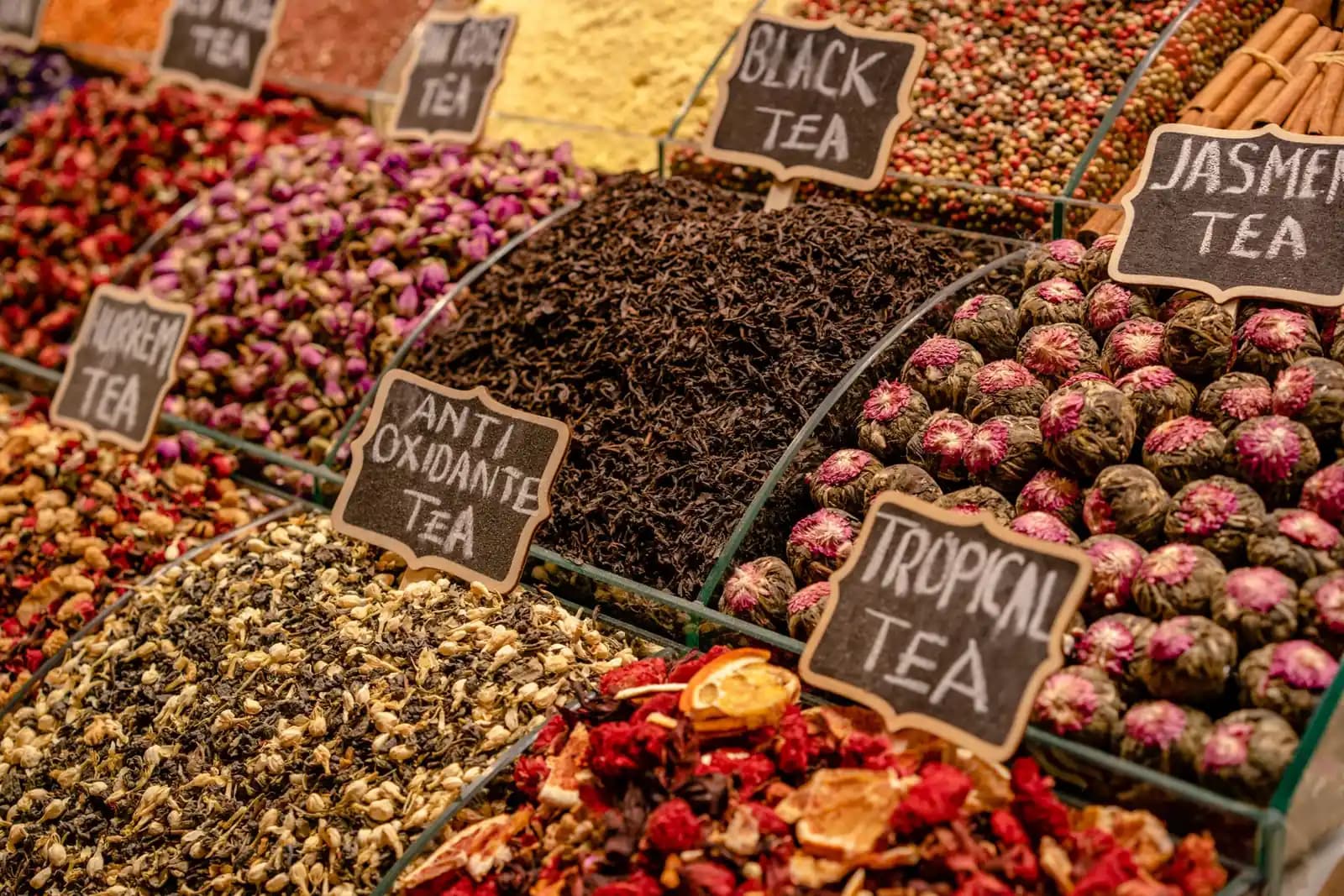
Tea & Seasonings Export Testing & Compliance Coaching
Test-plan coordination, buyer-specification review and lot-traceability coaching for tea, spices and seasonings exports.
- Rules mapped first
- Files and evidence aligned
- Less rework before audits
Core Challenges for Tea & Seasonings
Tea and seasonings projects most often stall on pesticide MRLs, contaminants, buyer specs and origin traceability.
Market differences in pesticide MRLs
Pesticide limits and methods differ by market; destination regulation and buyer specs are authoritative.
Contaminants & mycotoxins
Heavy metals, mycotoxins and other contaminants need test coverage designed by product and market.
Buyer specs & test coverage
Buyer specs are often stricter than regulatory baselines, so test coverage must be checked item by item.
Lot & origin traceability
Buyers require traceability to origin, lot and production date to support recalls.
Coaching Route
From product and market confirmation to file-package assembly, tea and seasonings export preparation broken into executable steps.
Product & target-market confirmation
Confirm product category, destination and buyer.
- Product & market list
- Buyer requirement list
Buyer spec & destination regulation review
Check pesticide, contaminant and test-method requirements item by item.
- Specification map
- Limit framework note
Test-plan design & sampling coordination
Design test coverage and coordinate sampling; testing is performed by laboratories.
- Test matrix
- Sampling list
Report review & limit alignment
Review reports against buyer specs and destination limits.
- Report review notes
- Limit alignment table
Lot traceability & file package
Connect origin-to-shipment traceability and assemble the COA/report package.
- Traceability flow
- File package list
Decision Reference
Choose test coverage and file direction by export market and buyer requirement.
| Export market / buyer | Whose limits apply | QTC coaching |
|---|---|---|
| European Union | Destination-regulation MRLs + buyer specs | Spec review + test-plan coordination |
| United States | FDA framework + buyer specs | Framework reference + test-coverage alignment |
| Multiple markets | Market-by-market limit and method check | Multi-market test matrix + report alignment |
| Retail buyer | Buyer specification first | Spec alignment + COA/report package |
Note: QTC provides no unverified limit numbers; specific limits come from buyer specs, destination regulation and laboratory reports.
Key Requirements for Tea & Seasonings
This scenario centres on pesticide/contaminant test coordination and buyer specs, with limits from buyer specs and destination regulation.
Pesticide Residues / MRL
Buyer specs and destination regulation are authoritative; QTC helps review but provides no unverified limit numbers.
Contaminants
Test coverage for heavy metals, mycotoxins and other contaminants; testing is performed by laboratories.
Buyer Specifications
Buyer specs are often stricter than regulatory baselines; check coverage and files item by item.
Lot Traceability
Origin, lot and finished-product tracking plus mock recalls.
Continue to the Related Service Page
These service pages cover the scheme coaching, file preparation and testing coordination behind this scenario.
Frequently Asked Questions
Common questions about tea and seasonings export testing coordination.
Buyer specs and destination regulation are authoritative; QTC helps review applicable limits but provides no unverified numbers.
Related Practical Guides
Continue with the regulations, standards and audit points behind this scenario.
Food Allergen Control Checklist: Full Supply Chain Management from Ingredients to Labels
Complete food allergen management checklist covering raw material sourcing, formulation management, production controls, cleaning validation, and label declarations — for food factories and brands exporting to Europe and the US.
Food Recall & Traceability System Guide: From Lot Records to Mock Drills
Detailed guide to food traceability system components, recall plan core requirements, and mock drill methods to help food factories meet GFSI scheme, FDA FSMA, and buyer audit traceability requirements.
HACCP vs HARPC: Key Differences and Which Applies to Your Food Facility
Clear comparison of HACCP (Hazard Analysis and Critical Control Points) and HARPC (Hazard Analysis and Risk-Based Preventive Controls), covering applicable scenarios, documentation requirements, and PCQI responsibilities.
Why QTC
The value of quality coaching rests on a repeatable closed-loop method, field-based coaching capability, and a clear division of work.
Diagnose
Run a gap diagnosis against the target scheme and produce a gap list with priorities.
Build
Build the system, documents and evidence packs per the gaps.
Verify
Verify the system works through a mock audit / pre-audit.
Close
Close CAPA evidence, then re-check before the re-audit.
GFSI Schemes (BRCGS / FSSC 22000 / SQF / IFS)
Coaches gap diagnosis, document and system build, mock audits and CAPA closure; delivers gap lists, pre-audit reports and evidence packs.
US Export (FSMA / FSVP / 21 CFR 117)
Coaches food safety plans (PCHF), FSVP evidence organisation and file readiness; delivers applicability reviews and file checklists.
Food-Contact Materials & Test Coordination
Coaches migration test-plan design, sampling coordination and report review; delivers test matrices and file-alignment notes.
Coach backgrounds
Formerly with Intertek, BV, SGS, NSF and similar bodies
5000+ · QTC Group service cases
Audits are carried out by QTC's own team. Our auditors are experienced, several with audit backgrounds at large certification bodies; they undertake buyer-commissioned second-party audits and pre-audits and issue assessment reports.
Anonymised case
A food exporter · GFSI system build
Trigger: an overseas customer required a GFSI-benchmarked audit, and the plant's HACCP documents had drifted from floor practice. Work: gap diagnosis against the BRCGS clauses, food-safety plan and record rebuild, a mock audit, and item-by-item CAPA closure. Outcome: the gap list was fully closed, the pre-audit report was delivered to the plant, and the formal audit was scheduled and carried out as planned.
Certificates, verification statements and test reports are issued by the accredited body or laboratory that performs the work; formal audits are performed by accredited bodies, scheme owners, or the buyer's own auditors.
Find What Could Block Your Tea or Seasonings Export
Share the product, target market, buyer specs and current reports. QTC will identify the test-coverage and file gaps first.
Contact QTC